





Educational Lectures
 01
1:02:13
Novel Topical Anaesthesia for rapid wound numbing and prolonged analgesia for open wounds
A practical discussion of a topical anaesthetic designed to rapidly numb open wounds while providing prolonged analgesia and antimicrobial activity, with potential applications in trauma and military medicine.
01
1:02:13
Novel Topical Anaesthesia for rapid wound numbing and prolonged analgesia for open wounds
A practical discussion of a topical anaesthetic designed to rapidly numb open wounds while providing prolonged analgesia and antimicrobial activity, with potential applications in trauma and military medicine.
 02
1:47:48
Role 1 and Role 2: Scope, Requirements, Challenges and Opportunities
Frontline experience of organizing Role 1 and Role 2 trauma care when evacuation takes hours, resources are limited, and patient flow can change within minutes. The speakers examine triage, hemorrhage control, blood transfusion, surgical limits, mass-casualty workflows, evacuation, and the decisions that determine whether an intervention helps or only delays definitive care.
02
1:47:48
Role 1 and Role 2: Scope, Requirements, Challenges and Opportunities
Frontline experience of organizing Role 1 and Role 2 trauma care when evacuation takes hours, resources are limited, and patient flow can change within minutes. The speakers examine triage, hemorrhage control, blood transfusion, surgical limits, mass-casualty workflows, evacuation, and the decisions that determine whether an intervention helps or only delays definitive care.
 03
1:06:11
Debridement and Management of Open Fractures in Combat Trauma
A practical lecture on open fractures and combat wounds, centered on meticulous debridement, infection prevention, temporary stabilization, soft-tissue coverage, and real clinical cases.
03
1:06:11
Debridement and Management of Open Fractures in Combat Trauma
A practical lecture on open fractures and combat wounds, centered on meticulous debridement, infection prevention, temporary stabilization, soft-tissue coverage, and real clinical cases.
Committee Basic Course
 01
1:15:30
Endovascular Management of Blast-Related Head and Neck Vascular Injuries
A case-driven lecture on diagnosing and treating complex head and neck vascular injuries after blast and penetrating trauma, based on frontline military hospital experience.
01
1:15:30
Endovascular Management of Blast-Related Head and Neck Vascular Injuries
A case-driven lecture on diagnosing and treating complex head and neck vascular injuries after blast and penetrating trauma, based on frontline military hospital experience.
 02
59:16
Damage Control Resuscitation Without a Knife
A physiology-first approach to damage control resuscitation in war trauma, focused on what can keep a bleeding casualty alive when evacuation, blood products, equipment, and time are severely limited.
02
59:16
Damage Control Resuscitation Without a Knife
A physiology-first approach to damage control resuscitation in war trauma, focused on what can keep a bleeding casualty alive when evacuation, blood products, equipment, and time are severely limited.
 03
57:29
Damage Control Resuscitation in Combat Trauma: Role 1 and Role 2
A practical lecture on damage control resuscitation at Role 1 and Role 2—from lethal-triad physiology to blood-product strategy under battlefield constraints.
03
57:29
Damage Control Resuscitation in Combat Trauma: Role 1 and Role 2
A practical lecture on damage control resuscitation at Role 1 and Role 2—from lethal-triad physiology to blood-product strategy under battlefield constraints.
 04
1:48:26
Non-Contrast Abdominal CT for Surgeons: A Practical Reading Algorithm
A practical guide to reading non-contrast abdominal CT when time is limited: choosing the right window, spotting surgical red flags, and deciding whether a patient needs intervention or observation.
04
1:48:26
Non-Contrast Abdominal CT for Surgeons: A Practical Reading Algorithm
A practical guide to reading non-contrast abdominal CT when time is limited: choosing the right window, spotting surgical red flags, and deciding whether a patient needs intervention or observation.
 05
1:06:32
Trauma-Induced Coagulopathy: Pathophysiology and Treatment Principles
A clinically grounded webinar on trauma-induced coagulopathy: why bleeding control must be definitive, when standard coagulation tests fall short, and how DCR, DCS, ROTEM and blood-based resuscitation fit into the first critical hour.
05
1:06:32
Trauma-Induced Coagulopathy: Pathophysiology and Treatment Principles
A clinically grounded webinar on trauma-induced coagulopathy: why bleeding control must be definitive, when standard coagulation tests fall short, and how DCR, DCS, ROTEM and blood-based resuscitation fit into the first critical hour.
Hemorrhagic Shock, Damage Control Resuscitation, and Damage Control Surgery
 01
1:08:23
Battlefield Hypothermia & Damage Control Resuscitation: Target Blood Heating Temperatures
An evidence-based presentation on managing hypothermia in combat trauma, featuring experimental data on blood warming up to 42°C and team workflows in the resuscitation bay.
02
59:16
Damage Control Resuscitation Without a Knife
A physiology-first approach to damage control resuscitation in war trauma, focused on what can keep a bleeding casualty alive when evacuation, blood products, equipment, and time are severely limited.
03
57:29
Damage Control Resuscitation in Combat Trauma: Role 1 and Role 2
A practical lecture on damage control resuscitation at Role 1 and Role 2—from lethal-triad physiology to blood-product strategy under battlefield constraints.
04
1:06:32
Trauma-Induced Coagulopathy: Pathophysiology and Treatment Principles
A clinically grounded webinar on trauma-induced coagulopathy: why bleeding control must be definitive, when standard coagulation tests fall short, and how DCR, DCS, ROTEM and blood-based resuscitation fit into the first critical hour.
01
1:08:23
Battlefield Hypothermia & Damage Control Resuscitation: Target Blood Heating Temperatures
An evidence-based presentation on managing hypothermia in combat trauma, featuring experimental data on blood warming up to 42°C and team workflows in the resuscitation bay.
02
59:16
Damage Control Resuscitation Without a Knife
A physiology-first approach to damage control resuscitation in war trauma, focused on what can keep a bleeding casualty alive when evacuation, blood products, equipment, and time are severely limited.
03
57:29
Damage Control Resuscitation in Combat Trauma: Role 1 and Role 2
A practical lecture on damage control resuscitation at Role 1 and Role 2—from lethal-triad physiology to blood-product strategy under battlefield constraints.
04
1:06:32
Trauma-Induced Coagulopathy: Pathophysiology and Treatment Principles
A clinically grounded webinar on trauma-induced coagulopathy: why bleeding control must be definitive, when standard coagulation tests fall short, and how DCR, DCS, ROTEM and blood-based resuscitation fit into the first critical hour.
 05
1:00:49
POCUS Beyond eFAST: Clinical Decisions in Shock and Trauma
Three trauma cases show how bedside ultrasound can clarify shock physiology, assess limb perfusion, reveal gastrointestinal complications, and guide high-stakes decisions beyond the standard eFAST protocol.
05
1:00:49
POCUS Beyond eFAST: Clinical Decisions in Shock and Trauma
Three trauma cases show how bedside ultrasound can clarify shock physiology, assess limb perfusion, reveal gastrointestinal complications, and guide high-stakes decisions beyond the standard eFAST protocol.
 06
2:04:18
Hostile Environment Surgery: Damage Control for Combat Trauma
A practical front-line lecture on damage control surgery in a hostile environment, built from early war experience near Orikhiv and focused on decisions that save life and preserve function when time, staff, light, water, and equipment are limited.
06
2:04:18
Hostile Environment Surgery: Damage Control for Combat Trauma
A practical front-line lecture on damage control surgery in a hostile environment, built from early war experience near Orikhiv and focused on decisions that save life and preserve function when time, staff, light, water, and equipment are limited.
Vascular Trauma and Perfusion Control in Combat Injuries
 01
58:38
Ballistic Vascular Injury Management: Hemorrhage Control, Shunts and Limb Salvage
Professor David Hampton of the University of Chicago breaks down the management of ballistic vascular injuries—from hemorrhage control and temporary shunting to fasciotomy, revascularization and definitive repair.
01
58:38
Ballistic Vascular Injury Management: Hemorrhage Control, Shunts and Limb Salvage
Professor David Hampton of the University of Chicago breaks down the management of ballistic vascular injuries—from hemorrhage control and temporary shunting to fasciotomy, revascularization and definitive repair.
 02
53:58
One Leg Good, Two Legs Better: The Tricky Trifurcation
Jonathan Morrison explores one of trauma surgery’s hardest decisions: when a severely injured lower limb can be meaningfully salvaged, when amputation is safer, and why restoring perfusion is only the beginning.
02
53:58
One Leg Good, Two Legs Better: The Tricky Trifurcation
Jonathan Morrison explores one of trauma surgery’s hardest decisions: when a severely injured lower limb can be meaningfully salvaged, when amputation is safer, and why restoring perfusion is only the beginning.
 03
1:17:48
Prolonged Tourniquets: Ischemia, Reperfusion and Compartment Syndrome
What happens when a tourniquet stays on for hours? A practical combat-trauma lecture on limb ischemia, reperfusion injury, compartment syndrome and fasciotomy, combining military evidence with lessons emerging from Ukrainian experience.
03
1:17:48
Prolonged Tourniquets: Ischemia, Reperfusion and Compartment Syndrome
What happens when a tourniquet stays on for hours? A practical combat-trauma lecture on limb ischemia, reperfusion injury, compartment syndrome and fasciotomy, combining military evidence with lessons emerging from Ukrainian experience.
 04
49:30
EVTM in Trauma: Early Vascular Access, REBOA and Hybrid Hemorrhage Control
A practical overview of Endovascular Resuscitation and Trauma Management (EVTM), from early femoral access and REBOA to embolization, stent grafting and hybrid surgery in critically unstable patients.
05
1:15:30
Endovascular Management of Blast-Related Head and Neck Vascular Injuries
A case-driven lecture on diagnosing and treating complex head and neck vascular injuries after blast and penetrating trauma, based on frontline military hospital experience.
04
49:30
EVTM in Trauma: Early Vascular Access, REBOA and Hybrid Hemorrhage Control
A practical overview of Endovascular Resuscitation and Trauma Management (EVTM), from early femoral access and REBOA to embolization, stent grafting and hybrid surgery in critically unstable patients.
05
1:15:30
Endovascular Management of Blast-Related Head and Neck Vascular Injuries
A case-driven lecture on diagnosing and treating complex head and neck vascular injuries after blast and penetrating trauma, based on frontline military hospital experience.
 06
1:09:35
Surgical Management of Carotid Artery Injuries
A practical lecture on carotid artery injuries in combat trauma: surgical exposure, damage-control decisions, temporary shunting, ligation, reconstruction, stroke prevention, and the realities of care across Role 2–4.
06
1:09:35
Surgical Management of Carotid Artery Injuries
A practical lecture on carotid artery injuries in combat trauma: surgical exposure, damage-control decisions, temporary shunting, ligation, reconstruction, stroke prevention, and the realities of care across Role 2–4.
Critical Care in Combat Trauma: Thoracic Injury, Respiratory Support, and ECMO
 01
1:14:04
Portable ECMO for Battlefield Trauma: Bringing Critical Care to the Wounded
A lecture on moving extracorporeal life support beyond the ICU and closer to the point of injury. Andriy Bachynskyi discusses portable battery-powered ECMO, trauma physiology, lung-protective support, cannulation, transport and the challenges of using extracorporeal technologies in wounded patients.
01
1:14:04
Portable ECMO for Battlefield Trauma: Bringing Critical Care to the Wounded
A lecture on moving extracorporeal life support beyond the ICU and closer to the point of injury. Andriy Bachynskyi discusses portable battery-powered ECMO, trauma physiology, lung-protective support, cannulation, transport and the challenges of using extracorporeal technologies in wounded patients.
 02
1:08:27
Combat Trauma of the Heart and Chest: A Cardiovascular Surgeon’s Perspective
A frontline-focused lecture on severe combat injuries of the heart, lungs and major vessels, with real operative cases, resuscitative thoracotomy, hemorrhage control and decision-making under limited resources.
02
1:08:27
Combat Trauma of the Heart and Chest: A Cardiovascular Surgeon’s Perspective
A frontline-focused lecture on severe combat injuries of the heart, lungs and major vessels, with real operative cases, resuscitative thoracotomy, hemorrhage control and decision-making under limited resources.
 03
45:12
Respiratory Failure in Combat Trauma: Role 1–Role 2 Principles and Monitoring
A practical guide to airway management, mechanical ventilation, capnography, and safe evacuation of combat trauma patients, grounded in real Role 2 experience.
03
45:12
Respiratory Failure in Combat Trauma: Role 1–Role 2 Principles and Monitoring
A practical guide to airway management, mechanical ventilation, capnography, and safe evacuation of combat trauma patients, grounded in real Role 2 experience.
 04
39:56
ECMO in Trauma and Critical Care: From Circuit Basics to a Combat Injury Case
A practical introduction to VV- and VA-ECMO: circuit components, cannulation, patient selection, complications, key evidence, and a real combat trauma case with severe ARDS.
04
39:56
ECMO in Trauma and Critical Care: From Circuit Basics to a Combat Injury Case
A practical introduction to VV- and VA-ECMO: circuit components, cannulation, patient selection, complications, key evidence, and a real combat trauma case with severe ARDS.
 05
1:29:00
Combat-Related Heart Injuries
A practical lecture on combat-related cardiac trauma: evacuation priorities, diagnostic pitfalls, operative access, myocardial repair, and the difficult decisions surrounding intracardiac foreign bodies.
05
1:29:00
Combat-Related Heart Injuries
A practical lecture on combat-related cardiac trauma: evacuation priorities, diagnostic pitfalls, operative access, myocardial repair, and the difficult decisions surrounding intracardiac foreign bodies.
 06
31:34
Diagnosis and Minimally Invasive Management of Combat Esophageal Injuries
A practical review of combat-related esophageal injuries, from early diagnostic suspicion and CT trajectory analysis to endoscopy, thoracoscopy, laparoscopy, and minimally invasive repair in carefully selected patients.
06
31:34
Diagnosis and Minimally Invasive Management of Combat Esophageal Injuries
A practical review of combat-related esophageal injuries, from early diagnostic suspicion and CT trajectory analysis to endoscopy, thoracoscopy, laparoscopy, and minimally invasive repair in carefully selected patients.
Regional Analgesia for Combat-Related Extremity Trauma
 01
35:40
Sciatic Nerve Block in Combat Trauma: Ultrasound vs Neurostimulation
A practical comparison of two sciatic nerve block approaches for severe lower-limb combat injuries, with a focus on rapid analgesia, mass-casualty workflow, and safe evacuation.
01
35:40
Sciatic Nerve Block in Combat Trauma: Ultrasound vs Neurostimulation
A practical comparison of two sciatic nerve block approaches for severe lower-limb combat injuries, with a focus on rapid analgesia, mass-casualty workflow, and safe evacuation.
 02
29:37
Regional Analgesia for Combat-Related Extremity Trauma During Early Evacuation
A practical lecture on introducing ultrasound-guided nerve blocks early in the care of patients with combat-related upper- and lower-limb injuries, with a focus on evacuation, workflow, ergonomics, and pain control.
02
29:37
Regional Analgesia for Combat-Related Extremity Trauma During Early Evacuation
A practical lecture on introducing ultrasound-guided nerve blocks early in the care of patients with combat-related upper- and lower-limb injuries, with a focus on evacuation, workflow, ergonomics, and pain control.
 03
40:08
Regional Anesthesia in Combat Trauma: Safety Across Roles 1–3
A frontline perspective on regional anesthesia in combat trauma: cumulative dosing, patient monitoring, evacuation timing, and communication between successive levels of care.
03
40:08
Regional Anesthesia in Combat Trauma: Safety Across Roles 1–3
A frontline perspective on regional anesthesia in combat trauma: cumulative dosing, patient monitoring, evacuation timing, and communication between successive levels of care.
Head, Neck, and Spine Trauma: Initial Surgical Decision-Making
 01
48:02
Penetrating Neck Trauma: The No-Zone Approach in Civilian and Combat Settings
A practical approach to penetrating neck trauma when CT, subspecialists, and time may not be available. The lecture moves from the modern no-zone algorithm to a challenging combat carotid injury and the decisions that determine what happens next.
01
48:02
Penetrating Neck Trauma: The No-Zone Approach in Civilian and Combat Settings
A practical approach to penetrating neck trauma when CT, subspecialists, and time may not be available. The lecture moves from the modern no-zone algorithm to a challenging combat carotid injury and the decisions that determine what happens next.
 02
39:14
Decompressive Craniectomy in Traumatic Brain Injury
A focused neurosurgical lecture on decompressive craniectomy in traumatic brain injury, with emphasis on intracranial pressure, Monro-Kellie doctrine, indications, operative requirements, and combat trauma considerations.
02
39:14
Decompressive Craniectomy in Traumatic Brain Injury
A focused neurosurgical lecture on decompressive craniectomy in traumatic brain injury, with emphasis on intracranial pressure, Monro-Kellie doctrine, indications, operative requirements, and combat trauma considerations.
 03
28:58
Combat Gunshot Injuries of the Spine: Surgical Tactics and CSF Leak Management
A practical lecture on how combat-related spinal gunshot injuries differ from civilian spinal trauma, with a focus on neurological assessment, indications for surgery, dural defects, wound CSF leakage, and operative decision-making.
03
28:58
Combat Gunshot Injuries of the Spine: Surgical Tactics and CSF Leak Management
A practical lecture on how combat-related spinal gunshot injuries differ from civilian spinal trauma, with a focus on neurological assessment, indications for surgery, dural defects, wound CSF leakage, and operative decision-making.
 04
54:24
Neurosurgical Care for Combat-Related Head Injuries at Forward Surgical Facilities
A field-based discussion of neurosurgical decision-making for severe combat head injuries: patient selection, CT-guided planning, penetrating brain wounds, hemorrhage control, wound debridement, dural repair, evacuation priorities, and the limits of damage-control neurosurgery.
04
54:24
Neurosurgical Care for Combat-Related Head Injuries at Forward Surgical Facilities
A field-based discussion of neurosurgical decision-making for severe combat head injuries: patient selection, CT-guided planning, penetrating brain wounds, hemorrhage control, wound debridement, dural repair, evacuation priorities, and the limits of damage-control neurosurgery.
Trauma in Pregnancy: Resuscitation, Monitoring, and Operative Decision-Making
 01
1:01:03
01
1:01:03 Early Acute Rehabilitation of Wounded Service Members
 01
2:41:39
01
2:41:39 Quality and Safety in Trauma Care: TQIP and Evacuation of Critically Injured Patients
 01
53:29
Building a Trauma Quality Improvement Program (TQIP) in Ukraine
Explore the fundamentals of adapting the American College of Surgeons' TQIP model to Ukraine's wartime challenges. Learn how data, collaboration, and systematic reviews elevate trauma outcomes.
01
53:29
Building a Trauma Quality Improvement Program (TQIP) in Ukraine
Explore the fundamentals of adapting the American College of Surgeons' TQIP model to Ukraine's wartime challenges. Learn how data, collaboration, and systematic reviews elevate trauma outcomes.
 02
47:25
Safe Evacuation of Critically Injured Patients: Triage, Monitoring and Transport Readiness
A practical lecture on evacuation categories, pre-transport assessment, resuscitation targets, monitoring standards, equipment readiness, and real clinical scenarios in the transport of critically injured patients.
02
47:25
Safe Evacuation of Critically Injured Patients: Triage, Monitoring and Transport Readiness
A practical lecture on evacuation categories, pre-transport assessment, resuscitation targets, monitoring standards, equipment readiness, and real clinical scenarios in the transport of critically injured patients.
About the Committee
The Trauma Surgery focus area at the Ukrainian College of Surgeons (UCS) covers emergency surgical care, modern approaches to traumatic injury management, patient pathways, and coordination across care teams
It is a professional focus of the community that brings specialists together around clinical judgment, current protocols, system coordination, and a culture of high-quality trauma care in Ukraine
Senior Advisors

Danyliuk Oleksandr
Senior Advisor in Trauma Surgery; Active Military Surgeon with the 128th Mountain Assault Brigade; Former Officer of the Medical Forces Command of the Armed Forces of Ukraine and Deputy Director of the Healthcare Department, Ministry of Defence of Ukraine; Former Head of an Emergency Medical Care Unit at the Ministry of Health of Ukraine; Extensive experience in Emergency, Trauma and Military Surgery.
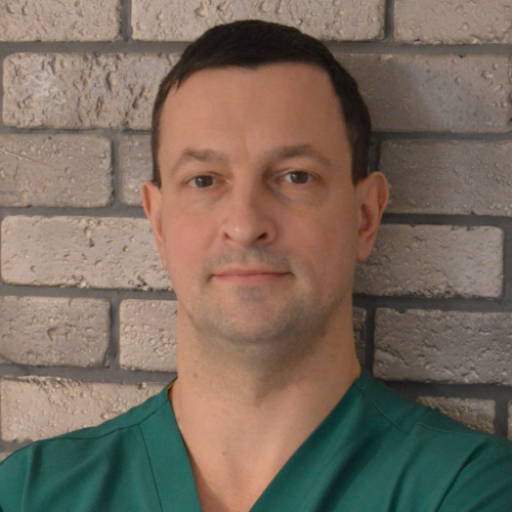
Dmytro Mialkovskyi
Surgeon and Vascular Surgeon; Candidate of Medical Sciences; Senior Lieutenant of the Medical Service; Alumnus of the Shalimov National Institute of Surgery and Transplantology; Member of the World Association of Laparoscopic Surgeons; Associate Member of the American College of Surgeons; Co-Director of the ASSET Course.

Mansoor Khan
Professor, MBBS, PhD, MBA, FRCS, FACS, FEBS; Royal Navy Veteran and Surgeon Commander; Co-author of “Trauma: Code Red” and “Fundamentals of Frontline Surgery”.
Key Focus Areas
-
✓Emergency assessment, stabilization, and surgical decision-making in trauma care
-
✓Multidisciplinary coordination and clinical alignment in complex cases
-
✓Modern principles of patient safety, triage pathways, and trauma system organization