



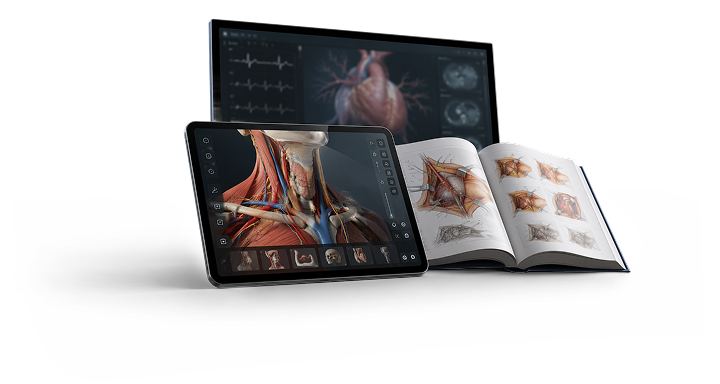
Aesthetic Surgery of the Head and Neck: Anatomy, Techniques and Complications
Thank you for your feedback!
How much tissue should a surgeon dissect, remove or reposition — and when is doing less actually the better operation? This introductory lecture approaches facial aesthetic surgery through anatomy, tissue preservation and patient-specific planning rather than a single fashionable technique.
The discussion moves from facial fat compartments, retaining structures, vascular and nerve anatomy to practical examples of upper and lower blepharoplasty, endoscopic forehead and temporal lifting, facelift and SMAS work, lipofilling, buccal fat procedures and other commonly discussed interventions. Particular attention is paid to how aging changes volume and fixation, why modern surgery increasingly favors repositioning over simple excision, and why deeper dissection is not automatically better.
Clinical examples highlight ectropion, hematoma, ischemia, skin necrosis and problems caused by excessive tension or tissue removal. The Q&A adds an experienced surgeon's perspective on learning new procedures, choosing between superficial and deep-plane approaches, postoperative asymmetry, previous fillers and threads, and the limits of trying to create an 'ideal' result. A useful foundation for trainees who want to understand not only how facial aesthetic operations are performed, but how surgeons decide how far to go.
The discussion moves from facial fat compartments, retaining structures, vascular and nerve anatomy to practical examples of upper and lower blepharoplasty, endoscopic forehead and temporal lifting, facelift and SMAS work, lipofilling, buccal fat procedures and other commonly discussed interventions. Particular attention is paid to how aging changes volume and fixation, why modern surgery increasingly favors repositioning over simple excision, and why deeper dissection is not automatically better.
Clinical examples highlight ectropion, hematoma, ischemia, skin necrosis and problems caused by excessive tension or tissue removal. The Q&A adds an experienced surgeon's perspective on learning new procedures, choosing between superficial and deep-plane approaches, postoperative asymmetry, previous fillers and threads, and the limits of trying to create an 'ideal' result. A useful foundation for trainees who want to understand not only how facial aesthetic operations are performed, but how surgeons decide how far to go.
PRAS-09
Course
Aesthetic Facial Surgery: Anatomy, Lifting, and Prevention of Complications
 01
55:02
Endoscopic Brow Lift: Anatomy, Dissection and FixationA practical surgical lecture on endoscopic brow lifting: patient selection, safe dissection planes, nerve anatomy, fixation strategies and complication management, illustrated with operative footage and clinical cases.
01
55:02
Endoscopic Brow Lift: Anatomy, Dissection and FixationA practical surgical lecture on endoscopic brow lifting: patient selection, safe dissection planes, nerve anatomy, fixation strategies and complication management, illustrated with operative footage and clinical cases.
 02
57:31 Now playing
Aesthetic Surgery of the Head and Neck: Anatomy, Techniques and ComplicationsAn introductory tour of modern facial aesthetic surgery: from fat compartments and fixation points to blepharoplasty, endoscopic lifting, SMAS techniques and the complications that shape surgical decision-making.
02
57:31 Now playing
Aesthetic Surgery of the Head and Neck: Anatomy, Techniques and ComplicationsAn introductory tour of modern facial aesthetic surgery: from fat compartments and fixation points to blepharoplasty, endoscopic lifting, SMAS techniques and the complications that shape surgical decision-making.
 03
47:05
Complications in Plastic Surgery: Case Review and ManagementLecture by Prof. Vasyl Vasylovych Khrapach on common complications in plastic surgery, with clinical cases, anatomical considerations, and management principles
03
47:05
Complications in Plastic Surgery: Case Review and ManagementLecture by Prof. Vasyl Vasylovych Khrapach on common complications in plastic surgery, with clinical cases, anatomical considerations, and management principles
 Aesthetic Surgery of the Head and Neck: Anatomy, Techniques and Complications